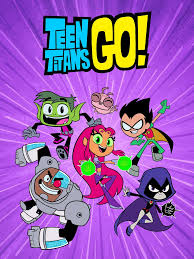
There's a special kind of TV show that gets famous for being hated. Not ignored — hated, loudly, by a fanbase that shows up in the comments every single week just to say it's ruining their childhood. Teen Titans Go! has been that show for over a decade now, and somehow, that's exactly why it's still on the air. While the internet argued about whether Cartoon Network had betrayed one of its best superhero shows, the network quietly built one of its biggest hits of the 2010s and 2020s — one that's now closing in on 500 episodes.
So how did a spinoff nobody asked for outlast almost everything else that premiered alongside it? The answer is messier, funnier, and more self-aware than most cartoons ever get credit for.
From Serious Superheroes to Comedy Shorts
To understand Teen Titans Go!, you have to go back to 2003. That's when Cartoon Network aired the original Teen Titans, a genuinely well-regarded action series that balanced anime-influenced fight scenes with real emotional stakes — Raven's inner demons, Beast Boy's grief, Robin's obsession with Slade. It ran five seasons, built a devoted fanbase, and then ended in 2006 without much closure.
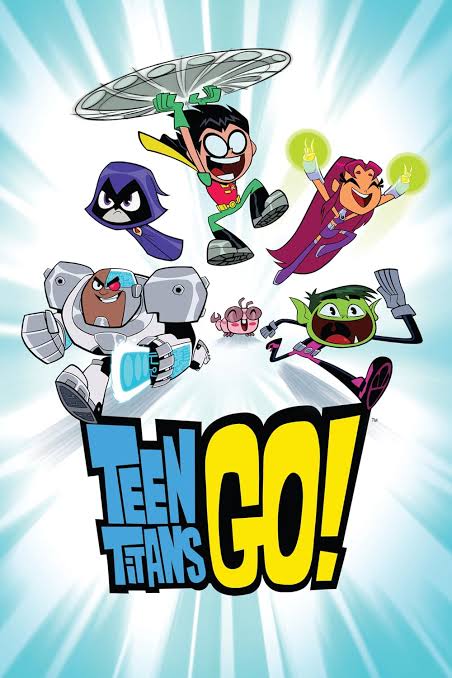
Rather than revive that show directly, Cartoon Network tested the waters with a series of one-minute shorts called New Teen Titans on its DC Nation block in 2011 and 2012. They were broad, slapstick, and nothing like the original's tone — and they were a hit. The network doubled down, expanded the format into a full half-hour series, and Teen Titans Go! premiered on April 23, 2013, with the episodes "Legendary Sandwich" and "Pie Bros." The premise was simple: same five heroes, same voice cast, zero continuity with the 2003 show, and a comedic engine built around the idea that superheroes still have to deal with chores, roommates, and each other's terrible ideas.
That last part matters more than it sounds. Because Teen Titans Go! isn't bound by an ongoing plot, it can do things a dramatic show never could — kill a character off for a punchline, spend a full episode on Robin's obsession with the IRS, or send the team to a Pretty Pretty Pegasus marathon instead of saving the world. It's a format built for chaos, and it leaned into that chaos immediately.
The Backlash: When the Creators Admitted They'd Never Watched the Original
The show's reputation problem started before a single episode aired. Fans of the 2003 series were still frustrated that it had ended without a proper finale, and that frustration curdled into resentment when they learned the replacement would be a comedy. Then came the detail that really lit the fuse: in an early interview, creators Aaron Horvath and Michael Jelenic admitted they had never actually watched the original Teen Titans series before making their version of it.
Quick Facts
- Premiered April 23, 2013, on Cartoon Network
- All five original voice actors returned: Scott Menville, Greg Cipes, Khary Payton, Tara Strong, Hynden Walch
- No shared continuity with the 2003 Teen Titans series
- Each episode runs 11–15 minutes, usually paired into a half-hour block
For a fandom already primed to be defensive, that admission felt like confirmation that the new show wasn't made with any respect for what came before it. What's genuinely funny, though, is how Teen Titans Go! responded to all of it — not by ignoring the criticism, but by writing it directly into the show. In the episode "The Fourth Wall," the Titans encounter their "original" 2003 counterparts and openly admit those versions were cooler. "Wally T" goes even further, giving the cast a single obsessive fan and having Robin needle him about which era of Titans he actually prefers. The show turned its own hate mail into material, which is a pretty rare move for a kids' cartoon.
Critical Reception: A Show Split Right Down the Middle
Away from the fan wars, professional critics were genuinely divided too, which tells you the backlash wasn't purely a nostalgia problem. Common Sense Media gave the series 4 out of 5 stars, praising its comedic take on the superhero formula for younger viewers, and IGN's pilot review landed at a solid 7.8 out of 10. On the other side, Slant Magazine gave it just 2 out of 4 stars, arguing the show's humor was generic and that it lacked the emotional weight of its predecessor.
"If not for the actors, whose talents can't save this lackluster material, Teen Titans Go! would offer little to even the most ardent Titans nostalgists and completists." — Slant Magazine review, 2013
That split is really the whole story of this show in miniature: critics evaluating it as a kids' comedy tended to like it fine, while critics and fans measuring it against a beloved drama walked away disappointed. Both readings are valid — they're just judging two very different shows that happen to share character designs and a title.
By the Numbers: 9 Seasons, 455 Episodes
Whatever the internet thought of it, Teen Titans Go! simply did not stop getting renewed. As of September 2026, the series has aired 455 episodes across nine seasons, making it one of the longest-running entries in the entire Teen Titans franchise — original series included.
| Season | Episodes | Aired |
|---|---|---|
| Season 1 | 52 | 2013–2014 |
| Season 2 | 52 | 2014–2015 |
| Season 3 | 53 | 2015–2016 |
| Season 4 | 52 | 2016–2018 |
| Season 5 | 52 | 2018–2020 |
| Season 6 | 52 | 2019–2021 |
| Season 7 | 52 | 2021–2022 |
| Season 8 | 42 | 2022–2024 |
| Season 9 | 52 | 2025–present |
Season 8 is the shortest run in the show's history at 42 episodes; every other season has landed at 52 or 53.
Part of that longevity comes down to format. At 11 to 15 minutes an episode, Teen Titans Go! can produce content faster and cheaper than a standard half-hour series, and its anthology-style structure means there's no ongoing arc to maintain or eventually wrap up. It can just keep generating standalone chaos indefinitely — which, nine seasons later, is exactly what it's done.
Teen Titans GO! To the Movies — and the Crossover Nobody Expected
The show's biggest cultural moment came in 2018 with Teen Titans GO! To the Movies, a theatrical feature that sent the team to Hollywood after Robin decides he's tired of being treated as a sidekick. Made on a modest $10 million budget, the film brought back the full TV cast alongside new additions Will Arnett and Kristen Bell, and delivered one of the most quietly beloved gags in recent DC history: Nicolas Cage voicing Superman, a nod to Cage's famously scrapped casting as Superman in Tim Burton's unproduced 1990s film.
The movie opened to $10.4 million domestically and went on to earn $29.8 million in the U.S. and Canada, plus another $22.6 million internationally, for a worldwide total of $52.4 million — more than five times its production budget. It wasn't going to compete with that summer's Incredibles 2, but for a spinoff of a show still fighting for legitimacy with a chunk of its own fanbase, that kind of return was a genuine win.
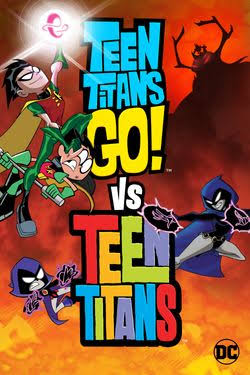
Even more interesting for longtime fans was the follow-up: Teen Titans Go! vs. Teen Titans, a direct-to-video crossover that brought the comedic cast face to face with their darker, more dramatic 2003 counterparts. For a fandom that had spent years arguing about which version deserved the name, watching both teams share a screen — and even acknowledge each other as legitimate — felt like the closest thing to an armistice this franchise was ever going to get.
The Legacy: Why It's Still Running
It's easy to focus on the backlash because it's loud, but it's worth zooming out. Teen Titans Go! has spun off its own ongoing DC Comics series since 2013, introduced an entire generation of younger viewers to these characters before they ever touch the source comics, and became a legitimate meme in its own right — cited endlessly as shorthand for "the goofy version" of a franchise, for better or worse.
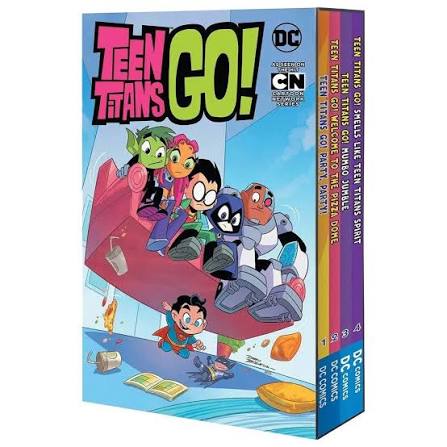
None of that erases the frustration longtime fans of the 2003 series still feel, and it probably shouldn't. But nine seasons and 455 episodes later, Teen Titans Go! has outlasted the argument about whether it deserved to exist in the first place. It's still the gateway a lot of kids use to find their way to the rest of the DC universe — jokes about the IRS and all.
The Bottom Line
Teen Titans Go! turned a hated reboot into one of Cartoon Network's longest-running hits by leaning into the joke instead of running from it — and nearly 500 episodes later, the backlash and the success have both turned out to be permanent.
| Character | Voice Actor |
|---|---|
| Robin | Scott Menville |
| Beast Boy | Greg Cipes |
| Cyborg | Khary Payton |
| Starfire | Hynden Walch |
| Raven | Tara Strong |
All five leads have voiced their characters continuously since the 2003 original — the one thing both versions of this franchise have always agreed on.