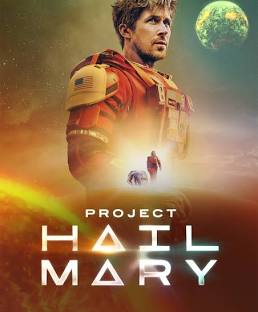
The short version: Project Hail Mary opened to $80.6 million domestic and $140.9 million worldwide in March 2026 — the biggest debut of the year and a record for Amazon MGM. It carries a 95% Rotten Tomatoes score, has grossed roughly $500 million globally against a $200 million budget, and is now available to stream. If you skipped it in theaters, this is your sign to fix that.
A Record-Breaking Opening
Most original, non-franchise science fiction films don't open like blockbusters anymore. Project Hail Mary did anyway. Over its opening weekend, the film pulled in an estimated $80.5 to $80.6 million domestically and $140.9 million worldwide — the biggest domestic debut of 2026 to that point, and the largest opening weekend in Amazon MGM Studios history, surpassing Creed III's previous mark of $58 million.
That kind of number for an original property, with no built-in franchise or existing cinematic universe behind it, put the film in rare company: one of only a handful of post-pandemic non-sequel releases to cross $70 million on opening weekend, alongside films like Oppenheimer.
What the Movie Is About
Key Facts
- Director(s)
- Phil Lord, Christopher Miller
- Writer
- Drew Goddard
- Based On
- Novel by Andy Weir
- Starring
- Ryan Gosling, Sandra Hüller, Ken Leung, Lionel Boyce, Milana Vayntrub
- Studio
- Amazon MGM Studios
- Release Date
- March 20, 2026
- Runtime
- 156 minutes
- Budget
- ~$200 million
Ryland Grace (Ryan Gosling) wakes up alone on a spaceship, light years from home, with no memory of who he is or how he got there. As his memory slowly returns, he pieces together the mission he was sent on: solve the riddle of a mysterious substance that's causing the sun to die out, before it takes Earth with it. He has to lean on his own scientific training and improvisation to survive — but it turns out he may not have to do it entirely alone.
Sandra Hüller plays Eva Stratt, the administrator running the mission from Earth, and much of the film's emotional weight comes from an unexpected alien companion Grace meets partway through his journey, brought to life largely through practical effects rather than CGI.

Gosling as Ryland Grace, aboard the Hail Mary spacecraft
What's Working — Critical Reception
Critics landed on the film fast and largely in agreement. It holds a 95% approval rating on Rotten Tomatoes (with some outlets tracking it as high as 96% at launch) and an 8.4 out of 10 audience score on IMDb, alongside a Metacritic score around 80. Reviewers repeatedly reached for Spielberg comparisons — a "big-hearted popcorn feast" was one description that stuck.
The most-praised element, across nearly every review, is the relationship between Grace and Rocky, his alien counterpart. Their communication — built through music, physical models, and an improvised translation system rather than dialogue — has been singled out as the film's most affecting stretch, and the practical-effects work behind Rocky has drawn comparisons to how E.T. was built decades earlier.
The Box Office Run
The opening weekend was just the start. In its second weekend, the film dropped only 33%, adding another $53 million domestically for a 10-day total near $163 million — a healthier hold than Dune: Part Two managed at the same point in its run. By its sixth week, it had crossed $305 million in North America and $613 million worldwide, and later tracking put its global total near $500 million, more than double its production budget.
Domestic Box Office Progression
| Milestone | Domestic Gross | Worldwide Gross |
|---|
| Opening Weekend (Mar 20–22) | $80.6 million | $140.9 million |
| Second Weekend | ~$163 million (10-day total) | — |
| Week Six | $305 million | $613 million |
| Current (as of Sept 2026) | — | ~$500–613 million |

From the official Project Hail Mary trailer
"People go to the movies to see a new experience. They don't go to see a thing they've already seen. Originality has value, especially as AI gets into the picture."
— Christopher Miller, co-director
Where to Watch It Now
Project Hail Mary's theatrical run has wound down, and the film has moved into its premium VOD and Prime Video streaming window. If you missed it in theaters — including the IMAX release, which accounted for roughly a fifth of opening-weekend revenue — this is the point where catching up is easiest. Check Prime Video first, since Amazon MGM controls distribution.
Book vs. Movie
For readers of Andy Weir's 2021 novel, the good news is that the adaptation stays close to the source material's structure and tone: the amnesia framing device, the flashback reveals, and the central Grace-Rocky relationship all carry over largely intact. Drew Goddard, who also adapted Weir's The Martian, was brought on specifically to preserve that balance of hard science and humor. Casual viewers who haven't read the book won't be lost, but fans of the novel should find the adaptation faithful rather than loose.
How It Stacks Up
Comparable Original Sci-Fi Openings
| Film | Opening Weekend (Domestic) | Rotten Tomatoes |
|---|
| Project Hail Mary (2026) | $80.6 million | 95% |
| Dune: Part Two (2024) | $82.5 million* | 92% |
| The Martian (2015) | $54.3 million | 91% |
| Oppenheimer (2023) | $82.4 million | 93% |
*Figures approximate, drawn from contemporaneous industry reporting.
What's Next
The bigger story here may be less about one movie and more about what studios take from it. An original science-fiction film with no sequel number in the title just out-opened most of this year's franchise entries, held its audience across multiple weekends, and doubled its budget worldwide. If that pattern holds, expect more mid-to-large-budget original sci-fi bets to get greenlit in 2027 — and don't be surprised if Gosling, Lord, and Miller end up in a room together again.
Project Hail Mary
Ryan Gosling
Andy Weir
Amazon MGM Studios
Sci-Fi Movies
Movie Reviews
2026 Box Office